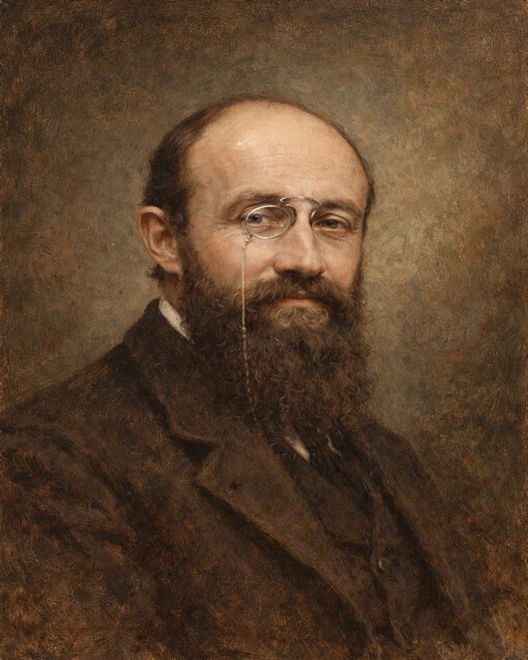
The Stanford-Binet ought, by rights, to be called the Stanford-Binet-Simon. The original 1905 scale that became the most consequential cognitive test in history was the work of two men: Alfred Binet, the psychologist at the Sorbonne, and Théodore Simon, the young psychiatrist who provided the study population, ran the field tests, and co-authored every paper on the scale Binet ever published.
The Stanford revisions of 1916 and after, undertaken by Lewis Terman, dropped Simon’s name from the title. It has been catching up ever since.
Who Théodore Simon was
Simon (1873–1961) was a French psychiatrist who began his career working in the Perray-Vaucluse asylum, where he had access to a population of children classified as intellectually disabled. He met Binet in 1899, when Simon was twenty-six and Binet was forty-two; they began their collaboration almost immediately, and continued it until Binet’s death in 1911.
The collaboration was, in Binet’s own description, the most fruitful of his career. Simon brought the clinical population, the institutional access, and the patient experimental temperament that Binet — restless, working alone, juggling multiple projects — could not have provided himself. Binet brought the experimental design, the theoretical framing, and the publishing platform of L’Année Psychologique.
What he contributed to the scale
Simon co-authored:
- The original 1905 Binet-Simon Scale (the “New Methods for the Diagnosis of the Intellectual Level of Subnormals,” published in L’Année Psychologique).
- The 1908 standardised revision, which introduced the mental-age concept.
- The 1911 final revision, which shipped weeks before Binet’s death.
- Mentally Defective Children (1907), the first textbook of clinical assessment for intellectual disability.
After Binet
Simon outlived Binet by half a century. He continued the work in France, contributing to subsequent revisions of the Binet-Simon Scale and to the broader literature on child psychiatry. He was, by all accounts, a careful and humble researcher who never sought credit for the test that had been built in part on his shoulders.
The American Stanford-Binet’s omission of Simon was almost certainly not malicious — Terman was working from the 1908 scale, which Binet had been the senior author on, and he chose a name that emphasised the institutional adopter. But the effect, sustained over a century, has been to render Simon’s name nearly unknown.
Restoring the name
The original society Binet had helped found was renamed in 1917 La Société Alfred Binet; in 1968 they renamed it again, La Société Binet-Simon, to put Simon’s name back where it belonged. We use Simon’s name freely on this site, by preference. Binet would have wanted it.

 Secure checkout


